Cheque Bounce Cases in India: What to Do If Your Cheque Is Dishonoured
Received a dishonored cheque? Here's the step-by-step legal process under Section 138 — notices, deadlines, and what happens in court.
CIVIL LITIGATION
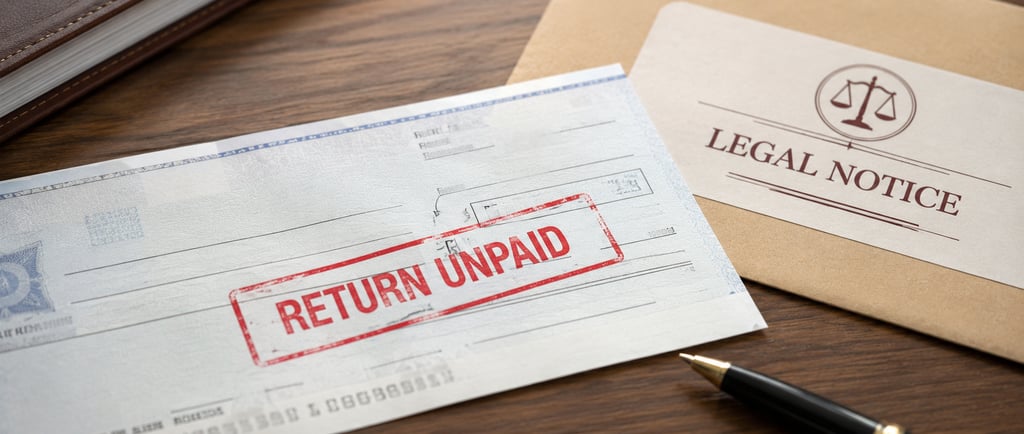
A dishonored cheque is more than a payment failure — under Section 138 of the Negotiable Instruments Act, 1881, it is a criminal offence. But the law comes with strict timelines, and missing any one of them can cost you your legal remedy entirely.
What Counts as a Cheque Bounce Offence
A cheque bounce becomes a criminal offence under Section 138 when a cheque issued to discharge a legally enforceable debt is returned unpaid by the bank — most commonly due to insufficient funds, a mismatched signature, or a closed account.
The cheque must have been issued for a genuine debt or liability. Cheques given as gifts or security without an underlying obligation generally do not attract this provision.
Step-by-Step: What to Do When a Cheque Bounces
1. Confirm the Dishonor
Once your bank returns the cheque unpaid, obtain the bank's official dishonor memo or return slip stating the reason. This document is essential evidence.
2. Send a Legal Demand Notice
Within 30 days of receiving the dishonor memo, send a formal legal notice to the cheque issuer demanding payment. This step is mandatory — skipping it prevents you from filing a complaint later.
3. Wait for the Response Period
The cheque issuer has 15 days from receipt of the notice to make payment. If they fail to pay within this period, your right to file a criminal complaint arises.
4. File a Criminal Complaint
If payment is not made within those 15 days, file a complaint before the appropriate Magistrate's court within 30 days of the expiry of that period. Missing this window can seriously complicate your ability to pursue the matter.
What the Process Involves After Filing
The court will examine the evidence — the bank documents, the legal notice, and proof of service — before issuing summons to the accused. The matter may proceed to trial if not resolved through settlement.
Cheque bounce cases under Section 138 are compoundable — meaning the parties can settle at almost any stage, with the complainant withdrawing the case upon receiving payment.
What If You're the One Accused?
Do not ignore a legal notice regarding a dishonored cheque. Potential defenses include disputing that a legally enforceable debt existed, challenging the validity of the notice, or demonstrating that payment was made within the statutory period.
Why Acting Quickly Matters
The strict timelines built into Section 138 mean delay can cost you your legal remedy entirely. Whether you are pursuing a claim or have been accused, prompt legal advice is essential.
If you are dealing with a dishonored cheque, Rahul Yadav Legal can guide you through the legal notice, complaint, and court process with the urgency these matters require. Contact us for a consultation.
This article is for general informational purposes only and does not constitute legal advice. For guidance specific to your situation, please consult a qualified advocate.
contact
Support
+91 9971118135 5
+91 880044
© 2026 RAHUL YADAV & ASSOCIATES. All rights reserved.